
Crafting connection
Ōtautahi-based artist and carver Jon Mahuika-Jeet explores identity, culture, and self-reflection in his practice.
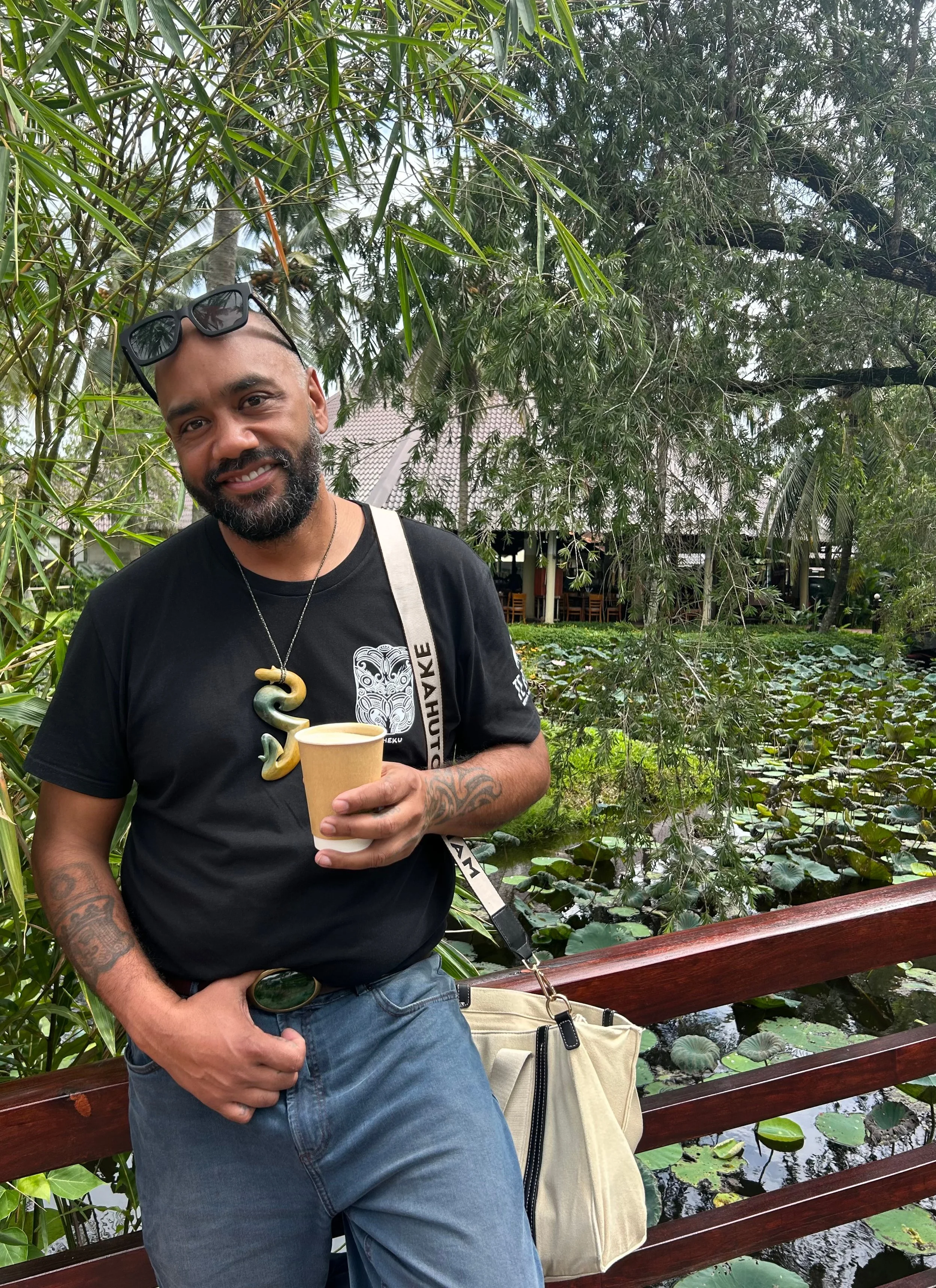
Working across painting, drawing, and pounamu carving for over 20 years, Jon’s multidisciplinary practice has evolved over decades, yet a common thread runs through it all: a desire to understand both himself and the world around him.
His earliest artistic influences came from beyond Aotearoa. While studying at university, Jon immersed himself in the work of African American artists Adrian Piper and David Hammons, alongside writer Edward Said.
“There is a truth from a non-dominant cultural lens,” he says. “A no-holds-barred rawness.”
Those ideas challenged him to examine his own identity as Māori and Fijian Indian, resulting in works that confronted race, perception, and belonging. Earlier pieces, including He Achuelian Angaanga (2017) and Hone (2018), questioned what it meant to be viewed as “a cultural trinket... a curiosity for the whiter audience.”
Yet as his practice matured, so too did the questions he was asking.
“You ask yourself, does my practice need to be racially charged?” he reflects. “Or do I start making work that has more of a universal appeal?”
The answer arrived in the form of tuna.
Over recent years, the humble eel has become a recurring figure throughout Jon’s paintings. Ancient voyagers that traverse Te Moana-nui-ā-Kiwa (Pacific Ocean), tuna carry stories that stretch across the Pacific, their serpentine forms weaving naturally through Māori pūrākau (myths and legends).
His latest paintings, currently featured in Kōrero 6 at The Central Art Gallery, mark both a continuation of that exploration and a return to painting itself.
Alongside the canvas sits another lifelong practice. Jon has worked with pounamu for more than two decades, describing the carving process as less about control and more about collaboration.
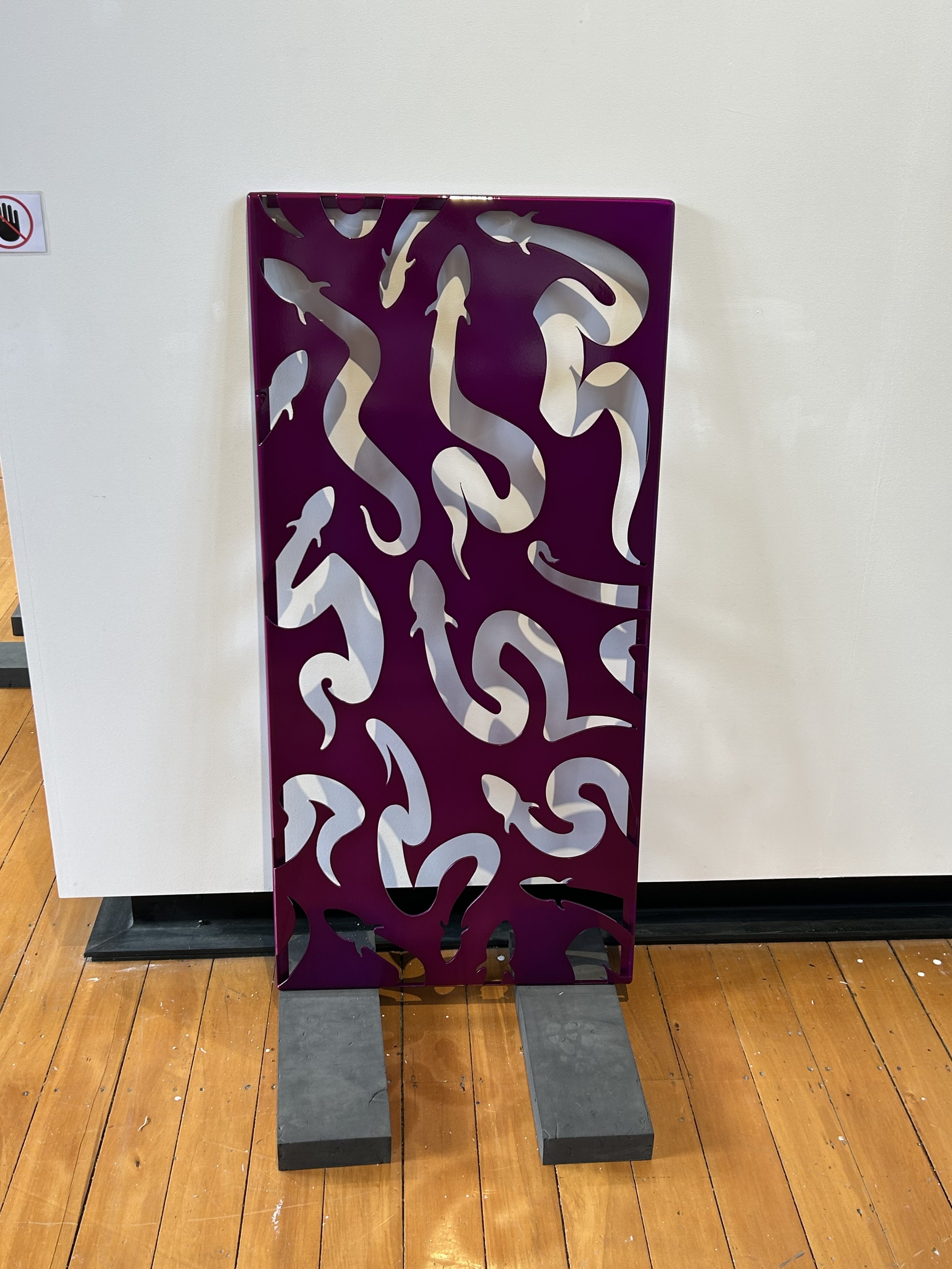
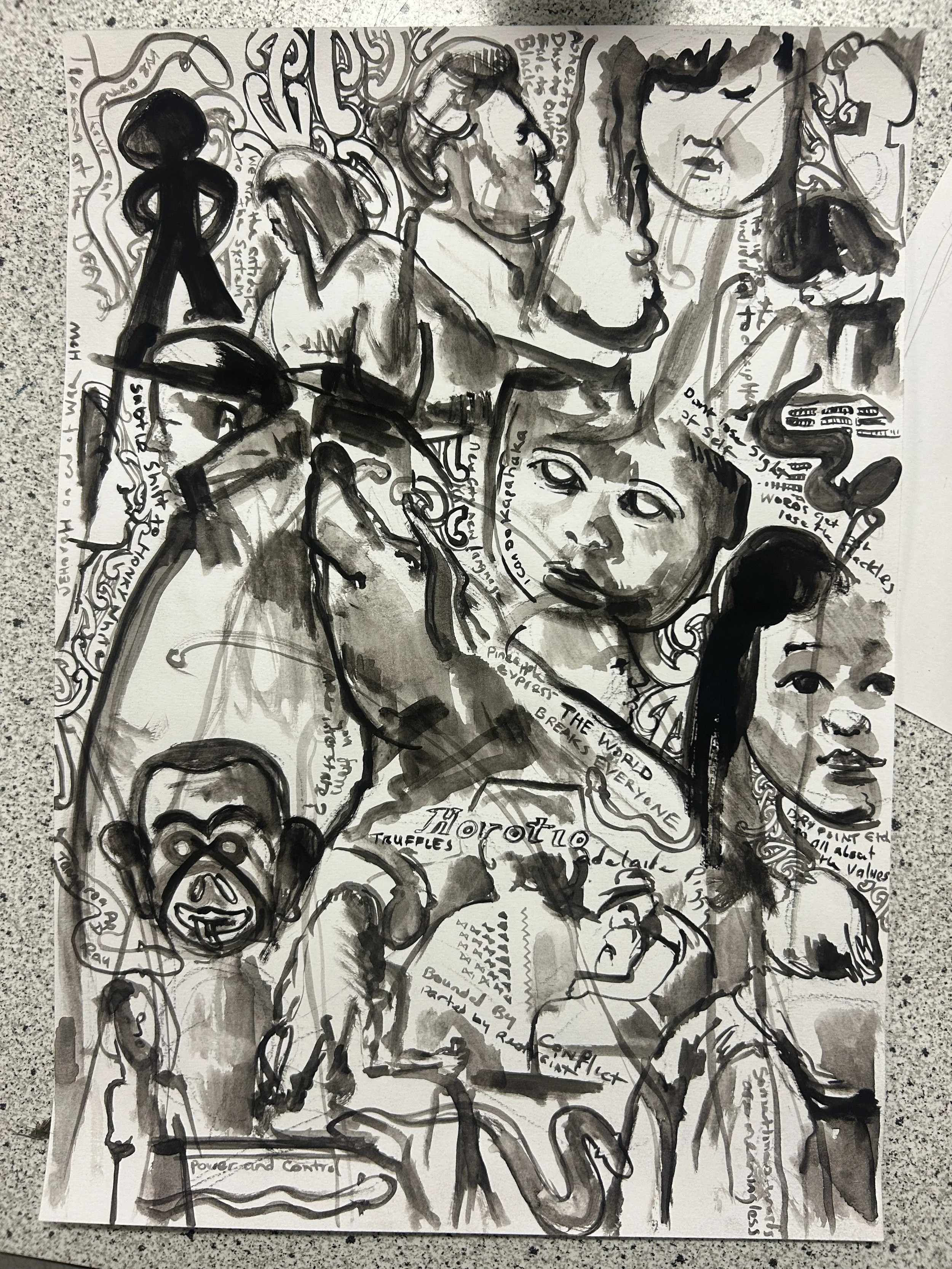
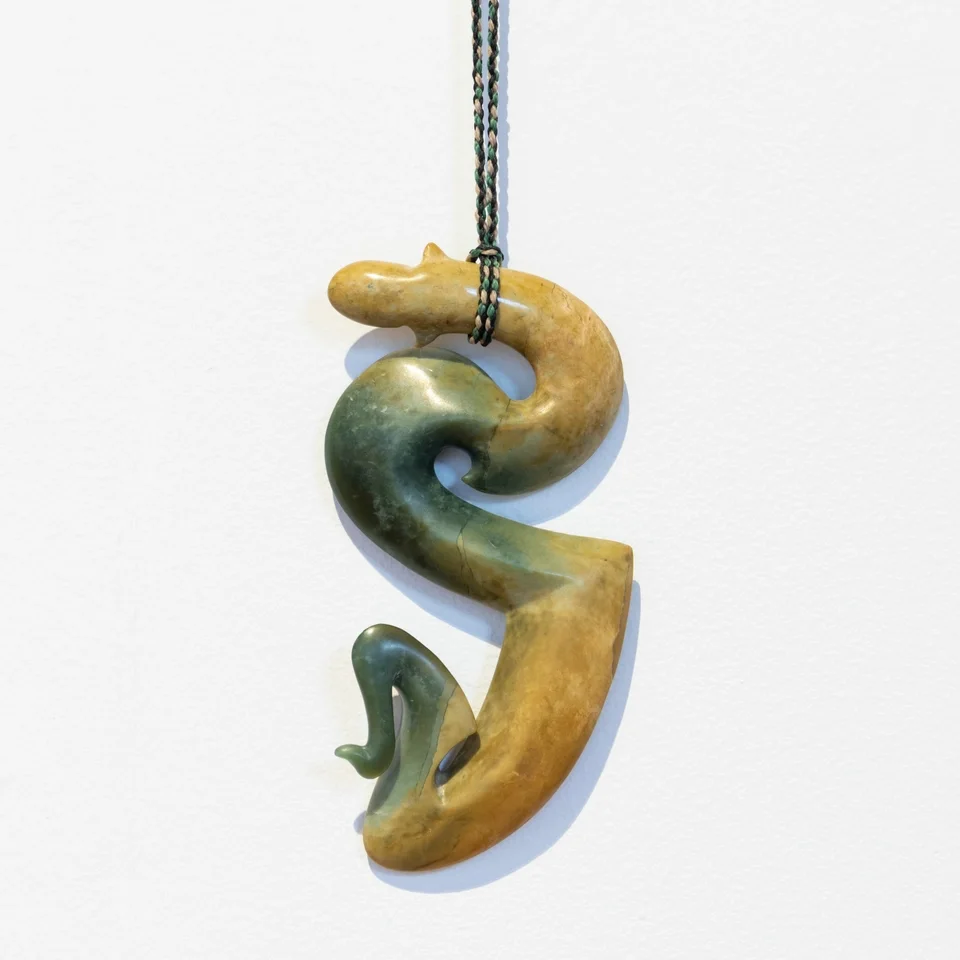
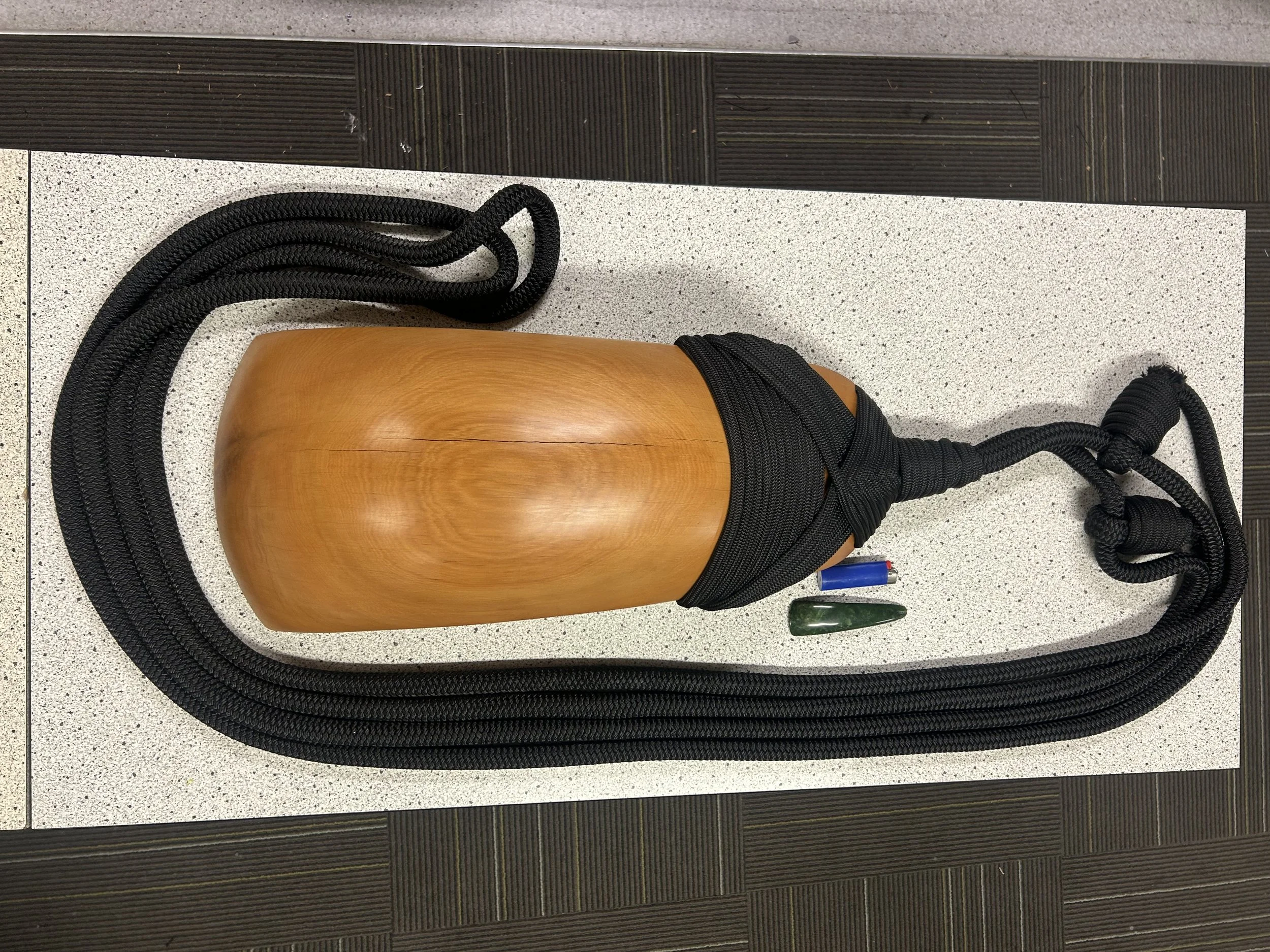
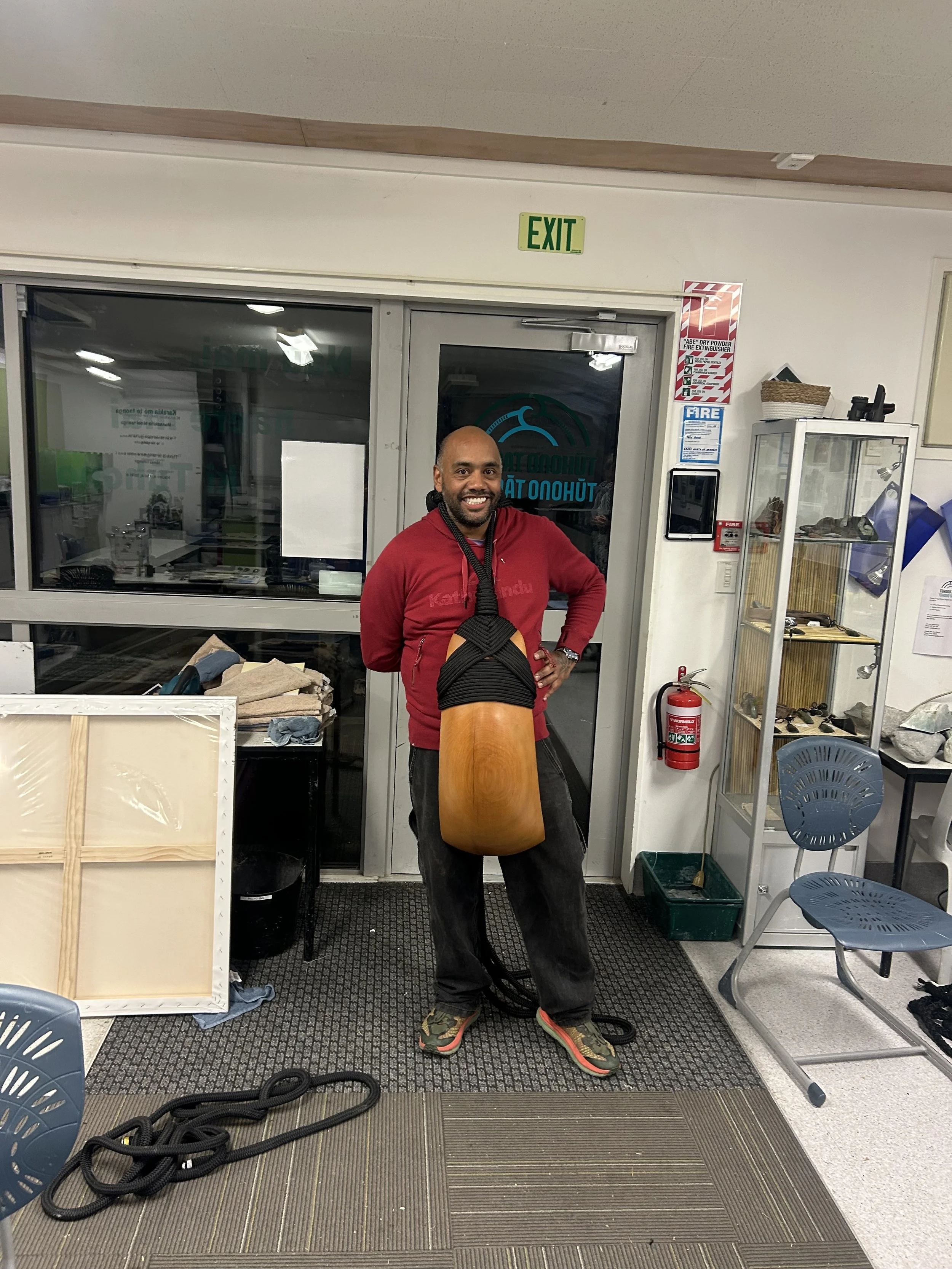
“From the unknown, seeing [pounamu] for the first time in her rawness, I query and start conversing,” he says. “You’re balancing what you would like her to become and what she allows you to form.”
Not every piece survives that conversation.
“Sometimes she decides, ‘No, I didn’t want to end up looking like that,’” he laughs.
Among the forms he returns to most often is the toki. While many associate it with strength and leadership, Jon believes its meaning is far less prescriptive.
“It can symbolise many different things,” he says. “On one hand, a teaching tool, and on the other, a way to connect with people. Teaching has always been a constant within my multidisciplinary practice. I think there’s a lot of learning coded into forming the toki. When the student has perfected the form, they will know the fundamental building blocks of carving.”
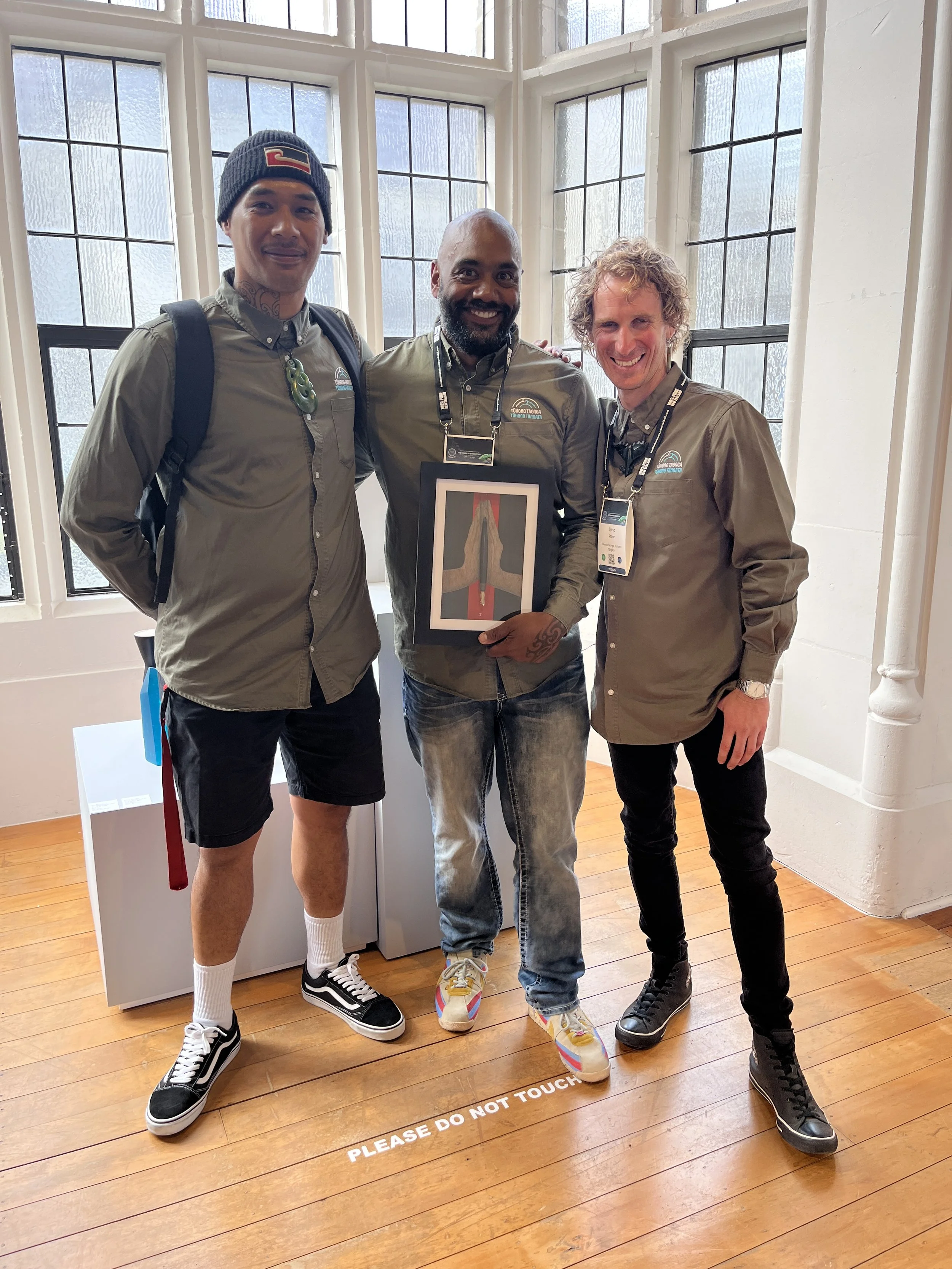
That philosophy has extended well beyond his own studio. Together with his wife, Irihāpeti, Jon established Tūhono Taonga, Tūhono Tangata – a trust dedicated to connecting people through taonga and mātauranga , via pounamu carving.
“It’s shifted from being about ‘I’ to becoming ‘we’,” Jon says.
Whether working in stone or paint, drawing remains at the heart of everything he creates. Sketchbooks are filled with recurring forms – tuna, kōwhaiwhai, koru, and figures.
Looking ahead, Jon is preparing for his first solo exhibition at The Central Art Gallery to coincide with his 50th birthday next year.
“The canvas has infinite possibilities,” he says. “I’m still trying to learn my voice.”