
The all clear
Christchurch startup Pyper Vision is taking on fog, using smart forecasting technology to help aviation cut delays, reduce costs, and improve efficiency.

Emily Blythe has always understood aviation as more than an industry – it’s been part of her family for generations. Dinner table conversations about the weather were more than small talk; they were stories of flight paths, disruptions, and the persistent challenges of working in the sky. It’s where her instinct to problem-solve first took shape.
The idea behind Pyper Vision began early. “The idea was a seed back when I was 16,” she says. Out of high school, she was part of the Young Enterprise Scheme, looking for a problem worth solving. It didn’t take long to find one.
Fog.
Her mother, an air traffic controller, had just come through a week of heavy disruption in the tower. Emily herself, learning to fly, had experienced the same frustrations. “It kind of bubbled away,” she says.
What began as an idea for fog dispersal – a way to clear the air using drones – has now evolved into a forecasting platform that turns weather, especially fog, from something aviation reacts to into something the industry can start planning around in real time.
It’s a deceptively simple concept, but one that addresses a major gap. Globally, fog forecasting is still unreliable. “Fog is one of aviation’s blind spots – almost half of it isn’t forecast, and most of the warnings that are issued end up being wrong.”
For an industry reliant on precision, and one where customers expect to get to where they want to go, those margins are staggering. Flights are delayed or diverted, schedules unravel, and costs climb – financially and environmentally.
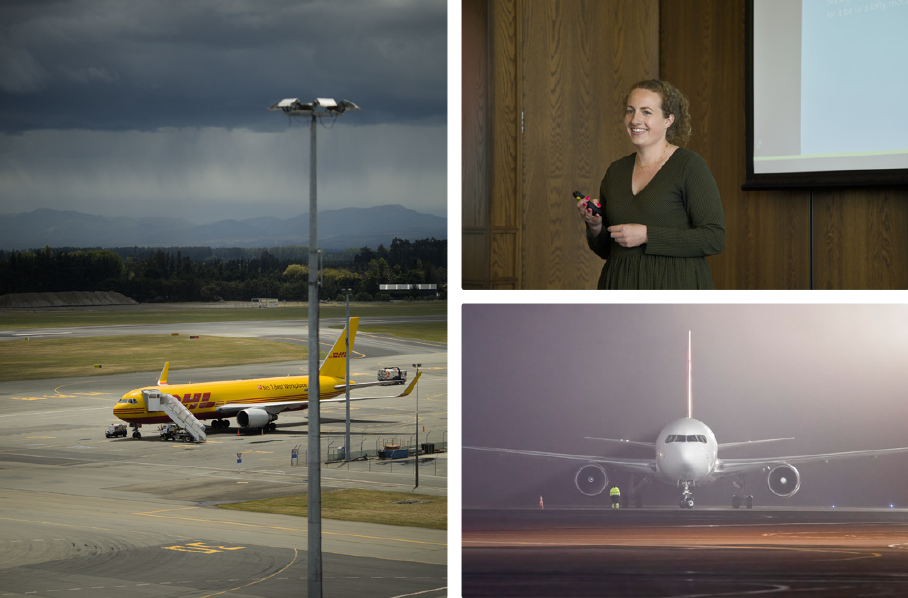
When the weather is wrong, 620 million passengers pay the price, contributing to $92 billion in airline losses and 32 billion hours of passenger frustration – with a quarter of these disruptions caused by low visibility alone.
Pyper Vision’s answer is to rethink forecasting entirely. The company is leaning into machine learning and AI, training systems on global datasets to better understand patterns in fog and low visibility.
“We’ve flipped it on its head,” Emily says. “Instead of relying purely on science and mathematics, we’re asking – what are the patterns we actually need to understand?”
Christchurch has played a key role in that journey. Support from the University of Canterbury helped shape early trials, while organisations like the Ministry of Awesome and ChristchurchNZ have also been invaluable.
“I think in Christchurch, we’ve got something really special when it comes to the aerospace scene,” Emily says. “We have businesses like Dawn Aerospace fostering talent and the Tāwhaki aerospace centre providing testing and launch sites.”
“Air New Zealand also helped us get onto the global stage… and gave us an opportunity to test in a real operating environment.”
“We’re now working alongside major airlines and aviation partners in live environments around the world. That level of engagement in both hemispheres tells us we’re not just solving a problem, we’re becoming part of the future of how aviation operates and I couldn’t be more proud.”
It’s a future that still feels close to home. For Emily, skies that once sparked frustration are now spaces of possibility. If Pyper Vision succeeds, its impact will stretch far beyond the cockpit, reshaping how aviation anticipates, adapts, and ultimately moves.