
The future is fibre
The world has a material shortage. What if one of New Zealand’s most familiar native plants could help solve that global problem?
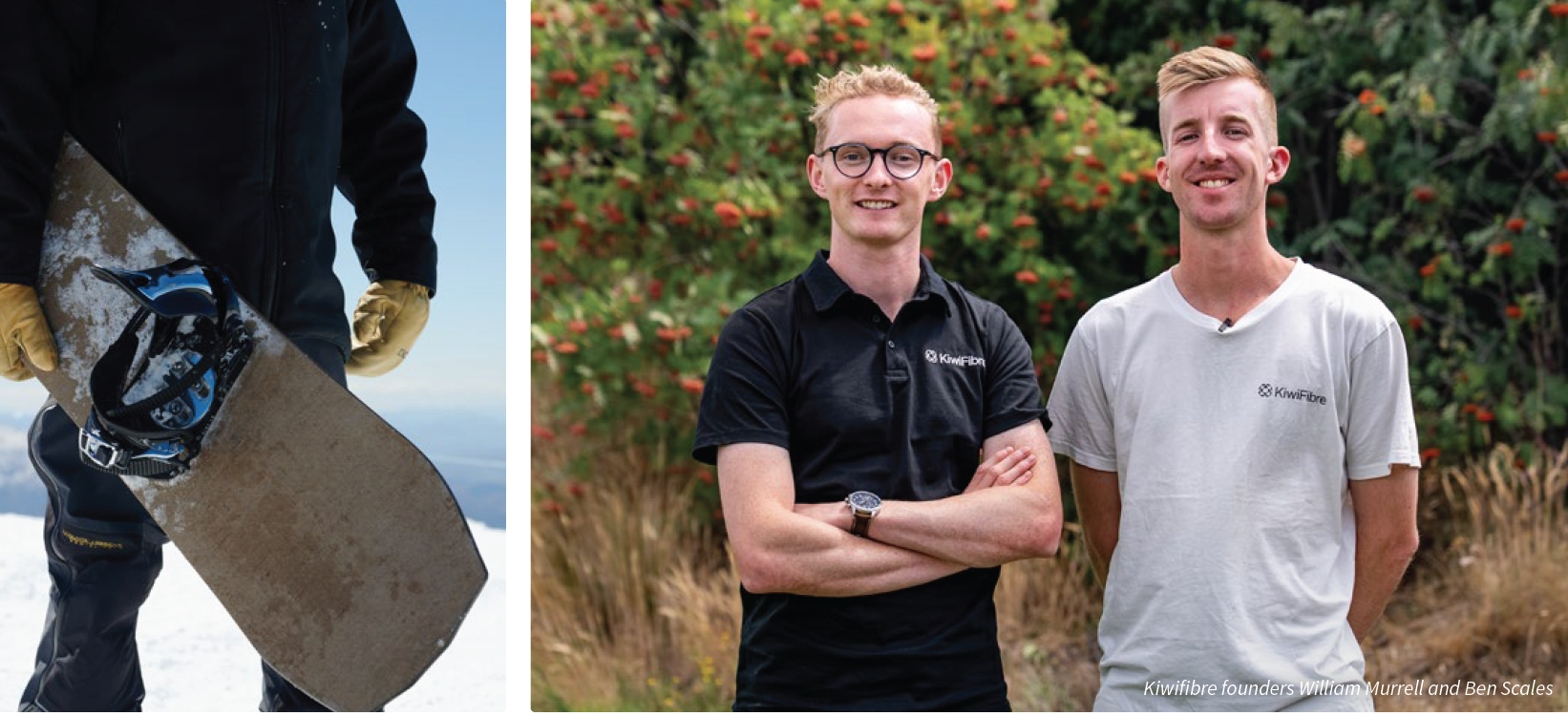
That’s the rather ambitious idea behind Christchurch-born KiwiFibre, where humble harakeke is being transformed into a high-performance alternative to carbon fibre and fibreglass – finding its way into everything from snowboards and race cars to boats.
Kiwifibre was founded by university friends Ben Scales and William Murrell – who made the 2025 Forbes 30 Under 30 Asia list.
Both had grown up tinkering. Ben’s family built homemade aircraft, while William experimented with carbon fibre, making rockets on the family farm. At university, the pair discovered the possibilities of natural fibre composites.
“I just couldn’t understand why nobody had commercialised it,” Ben says.
The answer, they believe, was sitting in the New Zealand landscape.
Harakeke offers vibration damping, energy absorption, impact resistance, and radio transparency, while providing a renewable alternative to energy-intensive synthetic materials. But for Ben, its potential stretches well beyond the product itself.
“It’s an incredible plant. It’s an incredible fibre,” he says. “It’s got so much potential.”
Christchurch proved the natural place to build the business. Ben points to Canterbury’s agricultural roots, access to renewable energy, and the extensive talent pool at the city’s universities.
“There’s so much here,” he says. “It didn’t make any sense to be anywhere else, really.”
Their product range is constantly evolving. It starts with snowboards before expanding into marine, automotive, mobility, and infrastructure. A partnership with The Aotearoa Ocean Racing Team will see the material used to create parts for a round-the-world boat, while Ben has another, slightly more audacious, ambition: a harakeke Formula One car.
There’s a bigger vision back home, too. KiwiFibre sees an opportunity to establish processing plants around New Zealand, creating tens of thousands of jobs and giving landowners an economic reason to return less-productive land to native planting.