
Kashmir to Cashmere
Avenues sits down with the new Executive Officer of Canterbury Charity Hospital, Dr Akshey A Shukla, MBA, Major (Retd), to get to know him.
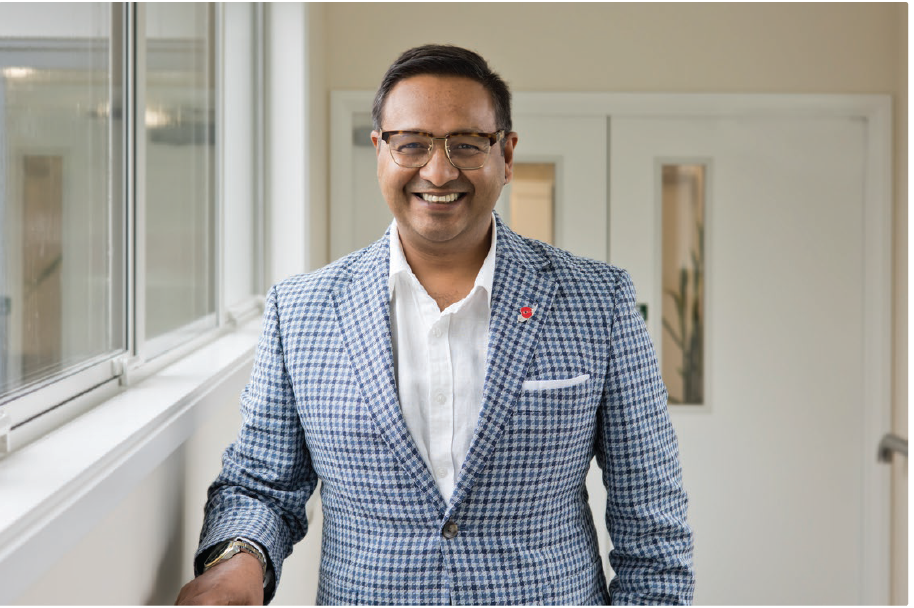
Kashmir and Cashmere, the suburb you now call home, share more than a name. Did you know that when you arrived?
I didn't. And when I found out, something quietly settled in me. The suburb was named in 1854 by Sir John Cracroft Wilson, a settler who had lived and served in Kashmir before coming to Canterbury — he named his new estate after the home he'd left behind. I didn't plan to end up here. But I did, on a hillside someone else had already named after home, more than a century and a half before I arrived. That has always felt like something more than coincidence to me.
You trained as a military surgeon before coming to New Zealand. What did that period give you?
Humility, mostly. When you are operating in genuinely difficult conditions, you very quickly understand how much depends on the people around you, the nurse beside you, the colleague who covered your shift, the team holding everything together. Surgery teaches you that no outcome belongs to one person.
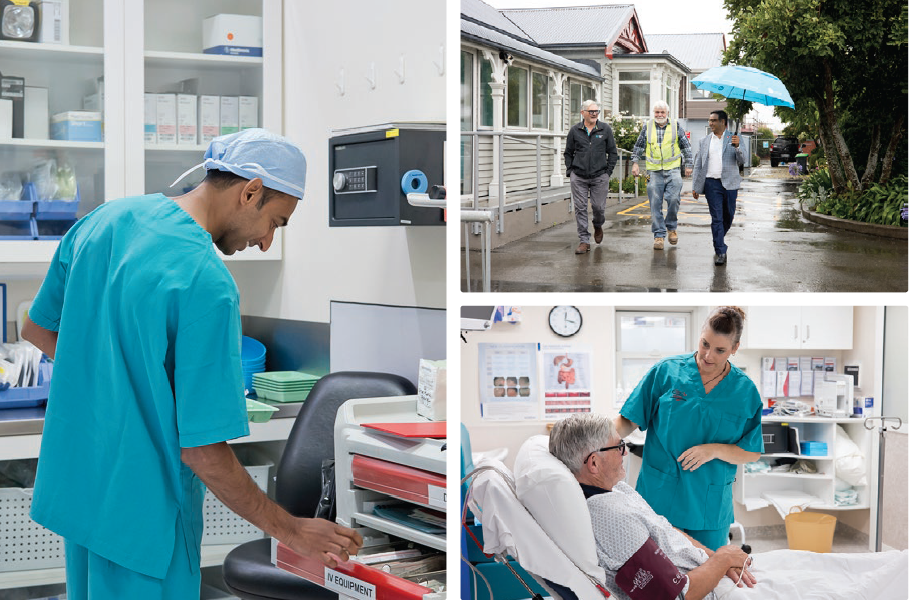
You came to New Zealand and found yourself managing COVID response in Canterbury. What was that like?
Honestly, what I remember most is how generous people were. Canterbury's health community showed up in ways that I don't think get talked about enough. People set aside their own pressures, their own institutional boundaries, and simply worked together to protect their community.
For readers who don't know Canterbury Charity Hospital, what's the gap it's filling?
Canterbury Charity Hospital provides free elective surgery and specialist services to people who cannot access the public system and cannot afford private care. People who are in pain. People who are waiting. People who have fallen into the gap between two systems that were never quite designed to hold them. The hospital exists because Dr Phil Bagshaw and a group of extraordinary surgeons, anaesthetists, nurses, donors, and volunteers decided that gap was unacceptable. What we do is not complicated to describe — we see people who would otherwise not be seen, and we treat them.
Canterbury Charity Hospital is opening a lecture theatre and clinical skills centre. What does that mean for the hospital and the community?
It means the building gets to be alive all the time, not just during clinical hours. The clinical skills centre will serve our team and the wider Canterbury health community for training and development, and we are also making it available to the community at no cost for events and gatherings.
This space should belong to Canterbury in a genuine sense — not just as a facility but as a place people feel welcome in. That feels like a natural extension of Dr Phil's vision.
The wider Canterbury health sector has supported this hospital so generously. What does that say about this community?
It says something Canterbury people already know but perhaps do not say loudly enough. The support from other hospitals, clinical networks, professional bodies, and individual clinicians has been extraordinary. These are busy people and busy organisations, and they turned up anyway — shared resources, referred patients, contributed expertise, backed us without being asked twice.
And perhaps that's the quieter point of the name itself — a hillside named after home once before, now home again.